Current reference · Grading
Why a newer GIA lab-grown report may look different
GIA's current services use an overall Premium or Standard assessment for eligible colorless to near-colorless laboratory-grown diamonds, while colored laboratory-grown diamonds and older documents can present different information.
- Source context
- Current GIA service information
- IZIOS review
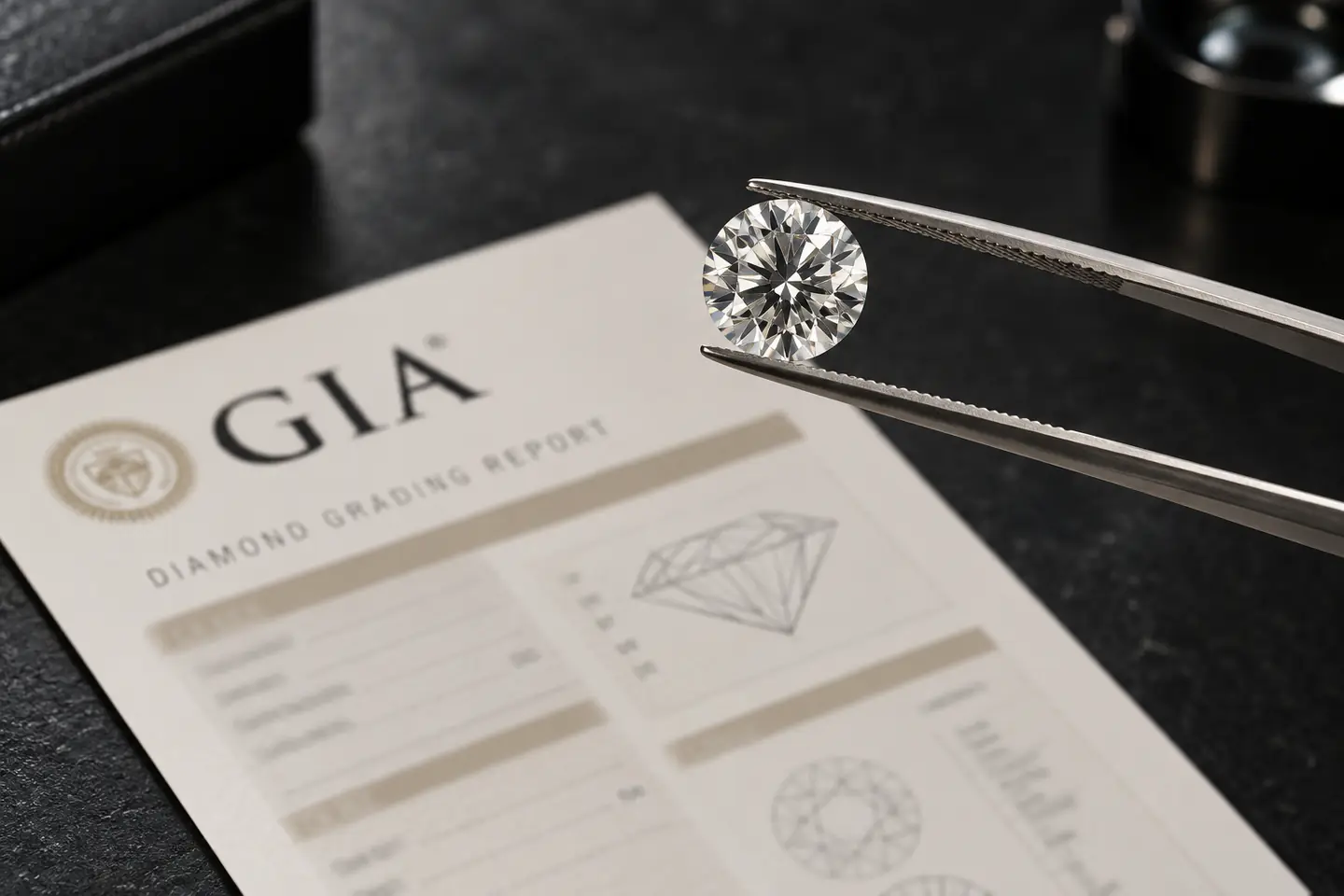
A GIA document can look unfamiliar even when it belongs to the right diamond. The reason is often the service used when the stone was submitted. GIA's current service page separates a Laboratory-Grown Diamond Quality Assessment for qualifying colorless to near-colorless stones from a Laboratory-Grown Colored Diamond Report. Older documents may reflect services and terminology that were current at an earlier date. A report is not a decorative attachment: it is the record of a particular laboratory examination, and its format tells part of that story.
Premium and Standard
For loose laboratory-grown colorless to near-colorless diamonds of 0.15 carats or more, GIA describes its current quality assessment as an overall classification of Premium or Standard. GIA says this assessment is based on color, clarity, and cut. That is different from treating the document as a copy of a traditional natural-diamond grading report with a D-to-Z color grade, a clarity grade, and a cut grade presented in the same familiar format. The change does not mean that details about the stone cease to matter. It means the service needs to be read on its own terms.
The separate colored-diamond service
GIA's colored laboratory-grown diamond service has a separate report format. Its current description includes a full quality assessment, plotted clarity diagram, and assessment of growth type and post-growth treatment for eligible loose colored laboratory-grown diamonds. That difference is useful when comparing fancy-color laboratory-grown diamonds, where color description and treatment history can be material to understanding the stone. It also explains why comparing a colored report to a colorless quality assessment field by field may create confusion: they do not promise the same set of observations in the same presentation.
Older GIA laboratory-grown reports can still appear in listings and private resales. Their terminology may look more familiar because grading services evolve. The document date and service name help put it in context. A purchaser should not convert an older grade into a newer Premium or Standard result, or convert a newer assessment back into an older grade, without an explicit basis from GIA. Those labels serve different reporting approaches. If a seller's page condenses the report, the report image or the laboratory record is the stronger source for what was actually issued.
Comparing documents and stones
Verification is worth doing before a purchase. Use the report number to consult GIA's report-checking service when available, and make sure the returned record matches the stone being discussed. Compare the number, report date, carat weight, shape, measurements, and identifying information shown in the listing. A match between a number and a laboratory result supports the document trail, but it does not replace looking at the diamond's current availability, media, condition, or seller terms. If a report is not present or fields appear inconsistent, pause and ask about that specific listing.
A practical example makes the difference clearer. A buyer may see one laboratory-grown colorless diamond with a current Premium or Standard assessment and another with an older document using familiar grade terms. Neither document should be treated as a translation of the other. The comparison begins with the actual stones: their measurements, appearance, report dates, and the service stated on each document. For a fancy-color stone, the color description and any growth or treatment information become part of the same picture. Clear report reading makes room for a better comparison without pretending that every format answers every question.