Archive: 2026 · Gold
Gold jewelry gets lighter as prices stay high
The World Gold Council's Q2 2026 report described lower global jewelry volumes alongside higher spending, a split that helps explain why lighter pieces became more visible in the market.
- Report period
- Q2 2026
- Source publication date
- IZIOS review
The Q2 2026 gold-jewelry figures tell an interesting double story. The World Gold Council recorded global demand of 278.2 tonnes, down 17% year over year from 335.3 tonnes in Q2 2025. Yet jewelry was still doing important work as a gift, a store of value, and a personal purchase in many markets. When the raw material costs more, people do not necessarily abandon jewelry; they may change the weight, scale, or timing of what they buy. That helps explain why lighter pieces became part of the conversation.
How lighter designs change the comparison
One visible adaptation is lighter construction. When the price of gold rises, a design using fewer grams can preserve a familiar silhouette at a different price point. The trade-off is not automatically negative. A lighter chain, thinner shank, smaller profile, hollow element, or more open setting can be a deliberate style choice. But weight affects more than the number on a scale: it can influence feel, durability, resizing options, and how a setting supports a diamond. A buyer should compare the actual construction and specifications, not assume that two similarly styled pieces will wear the same way.
Weight and spending
The World Gold Council's Q2 figures also separate volume from expenditure. It reported US$40 billion in jewelry spending, up 14% year over year, despite lower tonnage. Higher gold prices are part of the explanation. That is a useful corrective to the phrase demand is down, which can otherwise sound like a complete description of consumer behavior. Weight demand, monetary expenditure, regional performance, and the mix of products sold can move in different directions at the same time. No single global number tells a couple what a particular setting should cost today.
The metal within a finished design
For a diamond project, it can help to split the budget before falling in love with a finished image. The diamond has its own price, report, dimensions, and availability. The setting has a metal, a gram weight or construction decision, labor, design complexity, and sometimes a brand or custom-work component. A rise in gold price can affect the setting side even when the chosen diamond is unchanged. Conversely, choosing a different diamond shape or size can change how much metal is needed to create a balanced and secure design. Separating those choices makes later changes less mysterious.
The report should not be used as a forecast or as evidence that a retailer has raised, lowered, or fixed a price. The Council's figures cover a completed global quarter ending June 30, 2026, and a past average gold price does not substitute for a current quote, a maker's estimate, or a finished-product total. Regional markets have different purchasing habits, exchange rates, taxes, product mixes, and local supply conditions. A shopper comparing a ring in a local store is making a more specific decision than the global data can settle.
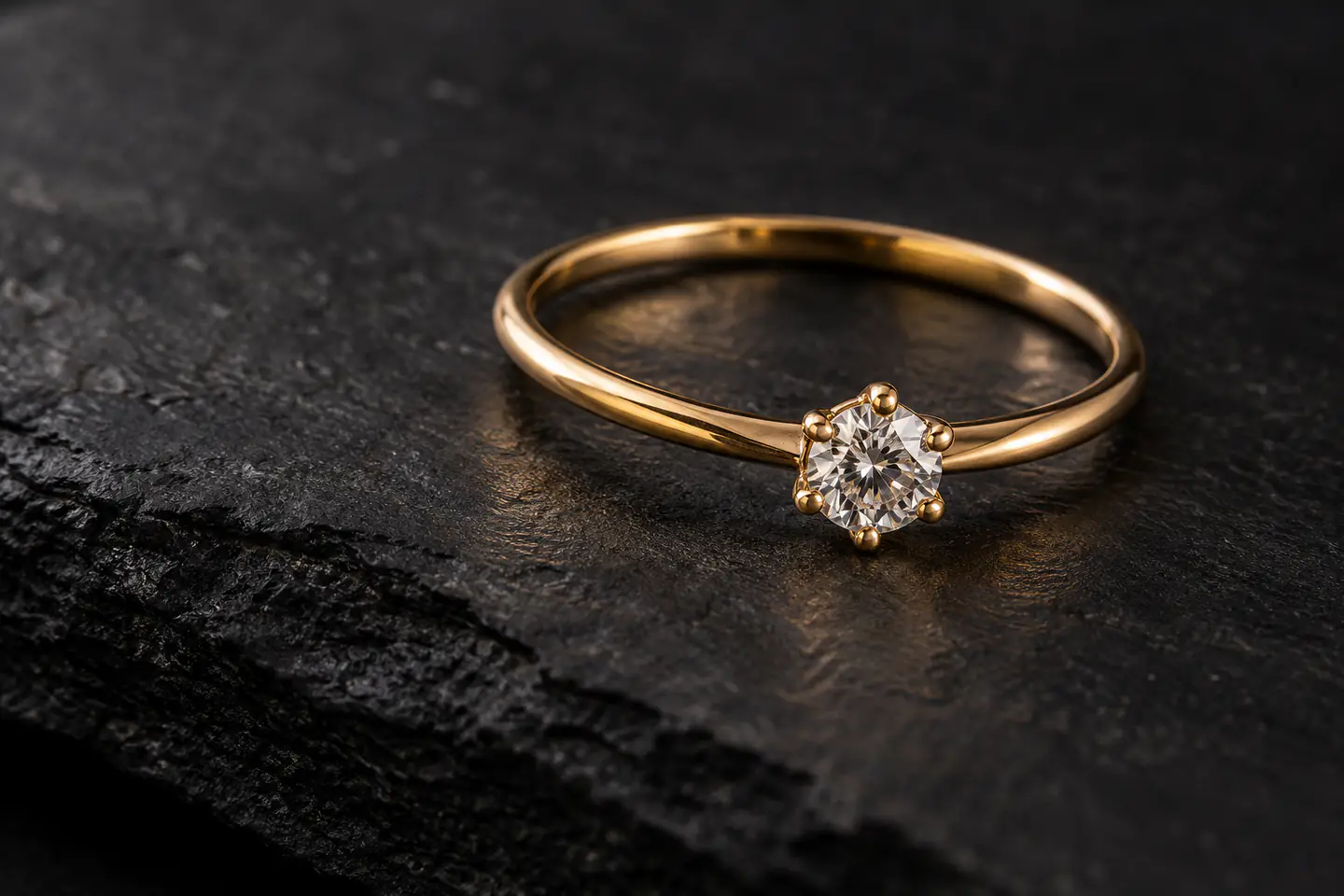
A simple design example shows why the distinction helps. A slender solitaire and a broad signet ring might both be made in 14-karat yellow gold, but they use metal very differently and have different visual goals. The first may put nearly all attention on the diamond; the second may make the gold surface part of the statement. Q2 2026 offers context for why shoppers and makers were thinking closely about weight. The final choice is still about the particular design, metal, and diamond in front of you.