Current reference · Diamond education
Where diamond color comes from
Diamond color begins with tiny changes in a carbon crystal, but the path can be geological, grown in a laboratory, treated after growth, or a combination of those histories.
- Source context
- Educational reference reviewed November 1, 2026
- IZIOS review
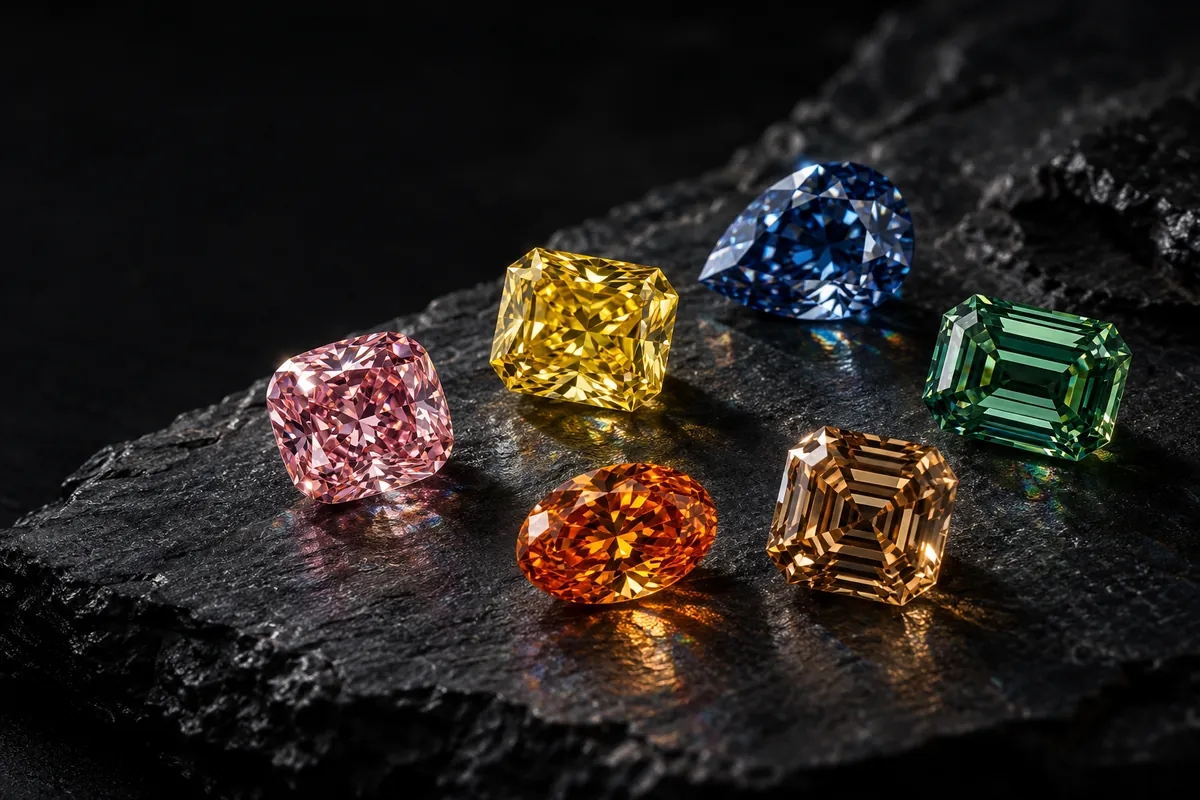
A colored diamond is still a diamond: its crystal is mostly carbon. What changes the appearance is the way that crystal absorbs and transmits light. A trace element can substitute for carbon, a missing atom can become part of a color-producing defect, or the orderly lattice can be distorted. Those events are microscopic, but the visible result may be yellow, blue, pink, brown, green, or a mixture of hues. Color is therefore not one question. A report may address whether a diamond is natural or laboratory-grown, whether its color is natural or treated, and how the color is described. Those are related facts, but they are not interchangeable labels.
Trace elements and crystal structure
Yellow and orange show why simple shorthand can mislead. GIA's research describes several nitrogen-related defects that can produce these colors. Nitrogen may be present in the diamond, yet its amount, arrangement, and the other defects around it determine whether color is visible and how it appears. GIA also notes that yellow and orange diamonds can occur naturally, be laboratory-grown, or result from treatment. The useful takeaway for a buyer is not to diagnose origin from a color name or a close-up photograph. The same visible family of color can have more than one material history.
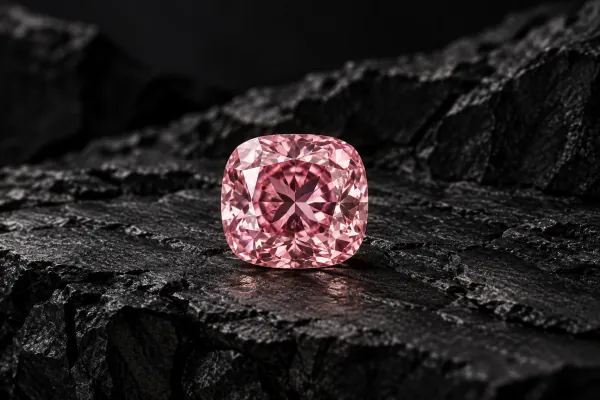
Natural blue diamonds are commonly associated with boron, while most natural pink diamonds have a different explanation. GIA's large study of pink diamonds found that crystal distortion accounts for the color in the overwhelming majority of the stones it examined. In plain terms, stress altered the crystal structure enough to change how it handles light. That research is valuable context, not a shortcut for identifying an individual stone. Origin and treatment determination depend on laboratory examination rather than an image, a color description, or a guess based on saturation.
Growth and treatment
Laboratory-grown diamonds are made by more than one growth method. High-pressure, high-temperature growth and chemical-vapor-deposition growth both create diamond on a seed, but they use different environments. The material can contain growth-related features and impurities that gem laboratories use in identification. Some laboratory-grown fancy colors are related to conditions during growth. Other colors are modified after growth. GIA has documented CVD-grown diamonds whose final orange or orangy-pink appearance followed multiple post-growth steps, including HPHT processing, irradiation, and annealing. That is why HPHT can describe either a growth method or a treatment; the surrounding report language matters.
Treatments belong in the story because they can create or alter the same kinds of defects that influence color during growth. Irradiation followed by heating, for example, can change a pale or off-color starting material into a more vivid result. That does not make the color less real to the eye; it tells a buyer how the finished appearance came about. A laboratory-grown diamond with growth-related color has a different history from a natural diamond with color, and a natural diamond with treatment has another history again. Gem laboratories examine the stone to distinguish those paths.
Reading the history of a particular stone
A report turns this science into a useful comparison. Imagine two pink diamonds with similar photographs. One report might identify a laboratory-grown diamond and disclose post-growth treatment; another might identify a natural diamond with a natural color origin. The pictures alone do not settle that difference, but the documents give the right questions a home. Read the identity, the full color description, and any treatment information together with the actual diamond's media. The science makes color more interesting; the report makes the claim specific.