Archive: 2026 · Jewelry business
Lab-grown center stones led The Knot’s 2026 engagement ring survey
The Knot reported that 61% of engagement ring purchases in its study used a lab-grown center stone. Here’s what the survey can tell you when planning a ring budget.
- Wedding cohort
- US couples married in 2025
- Source publication date
- IZIOS review
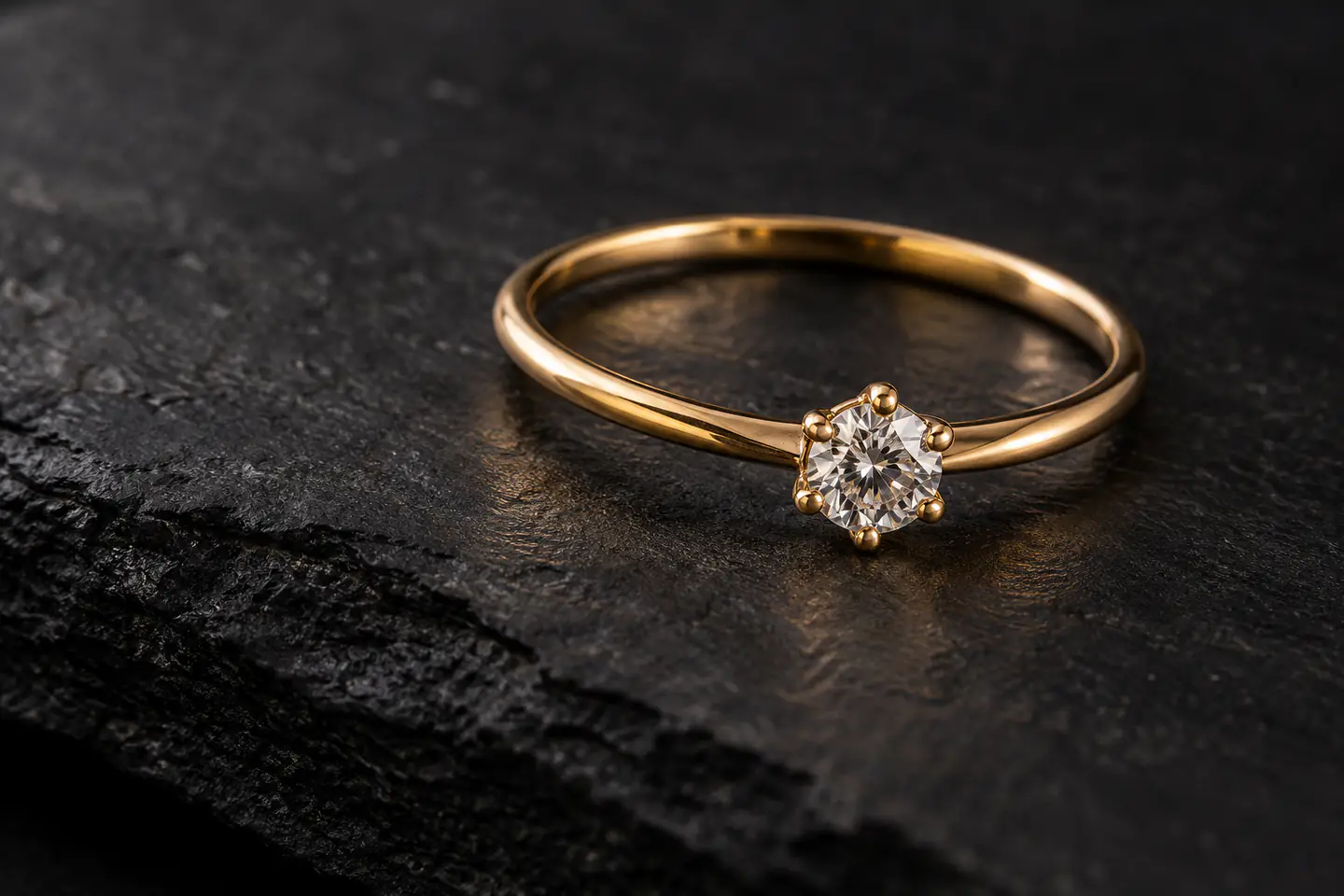
The Knot’s 2026 Real Weddings Study put lab-grown center stones at 61% of the engagement ring purchases it reported. Its ring data also puts round and oval close together among center stone shapes. A shopper comparing the two today will find a round outline that reads consistently from every angle, and an oval whose length, width and outline can vary noticeably between individual stones.
Who answered the survey
The study collected self-reported answers from 10,474 US couples who married in 2025 and were recruited through The Knot or WeddingWire. The publisher also draws on supplementary studies in its report. The results describe that surveyed audience. The share comes from reported purchases rather than nationwide retail transaction records, and the wedding year can be later than the ring purchase.
The survey reported an average of $4,600 for an engagement ring. An average is a description of the sample, and a finished ring total can include work beyond the diamond itself. A custom mount, side stones, sizing, and a metal choice can move the finished price even if two center diamonds have the same listed price.
What to compare when you have a budget
For a useful comparison, start with your total budget and get a quote for the type of setting you want. Subtract the setting and any other expected costs to find the amount available for the loose stone. Compare current listings of similar color and clarity, then open the report and check the face-up dimensions and available video. For an oval, compare both millimeter measurements so you can see how elongated each option will look.
Ask the jeweler to confirm the mounting fits the exact diamond and to put the setting, labor and timing in writing. With those figures in hand, you can compare two complete rings even if you buy the stone and setting in separate steps.