Current reference · Jewelry craft
Memorial jewelry with diamonds, made at Sugarberry
Sugarberry Memorials pairs handcrafted remembrance jewelry with configurations that can include laboratory-grown diamonds. Its customer conversations also helped inspire the practical search problem IZIOS set out to solve.
- Source context
- Published October 21, 2026 · founder account and current Sugarberry product pages
- IZIOS review
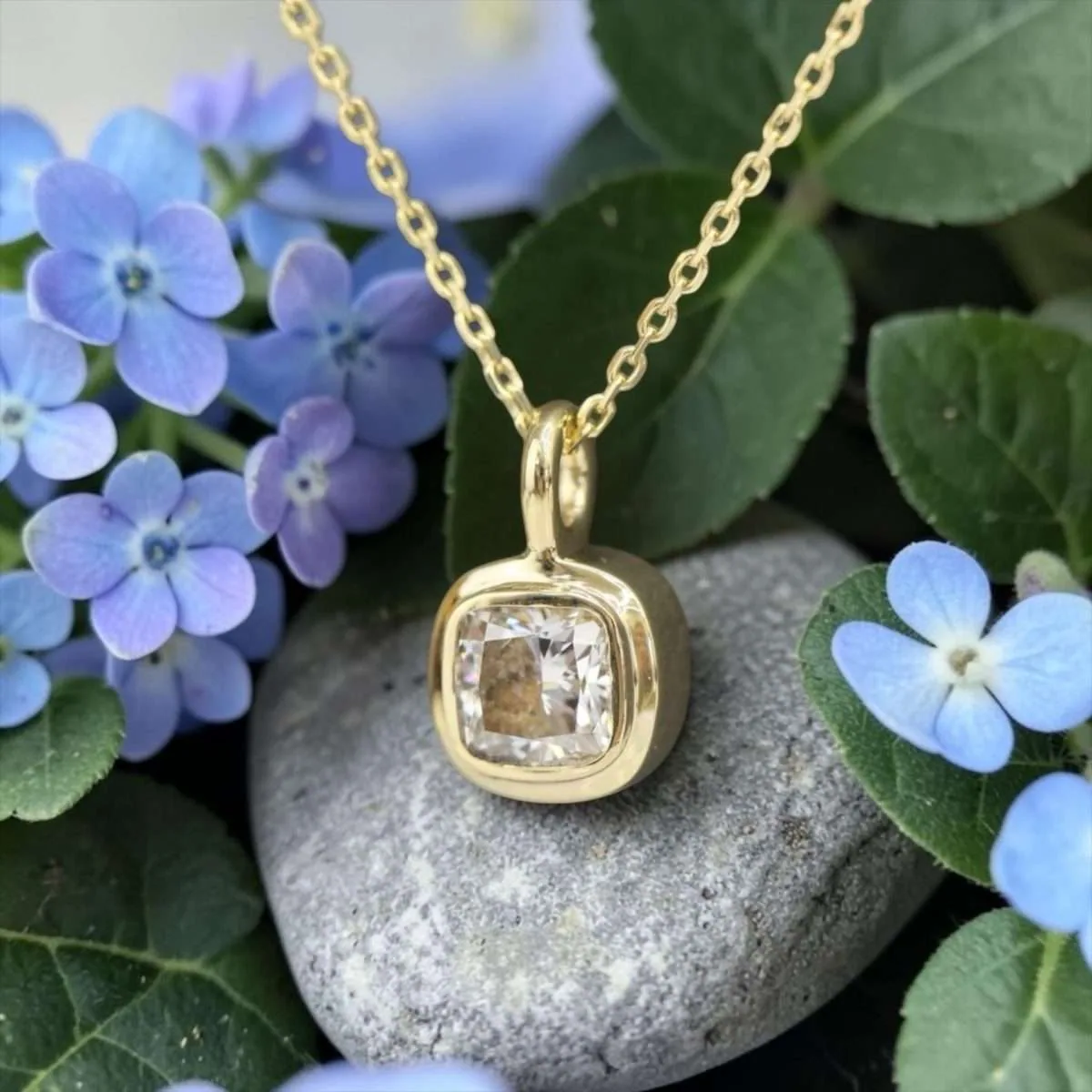
Kayce Jones makes memorial jewelry through Sugarberry Memorials, a family business built around pieces people can keep close. A pendant or ring becomes a place for remembrance as well as an object someone will wear. The Genesis pendants and Polaris ring approach that purpose through different forms, each with its own proportions, setting choices and place for the memorial element.
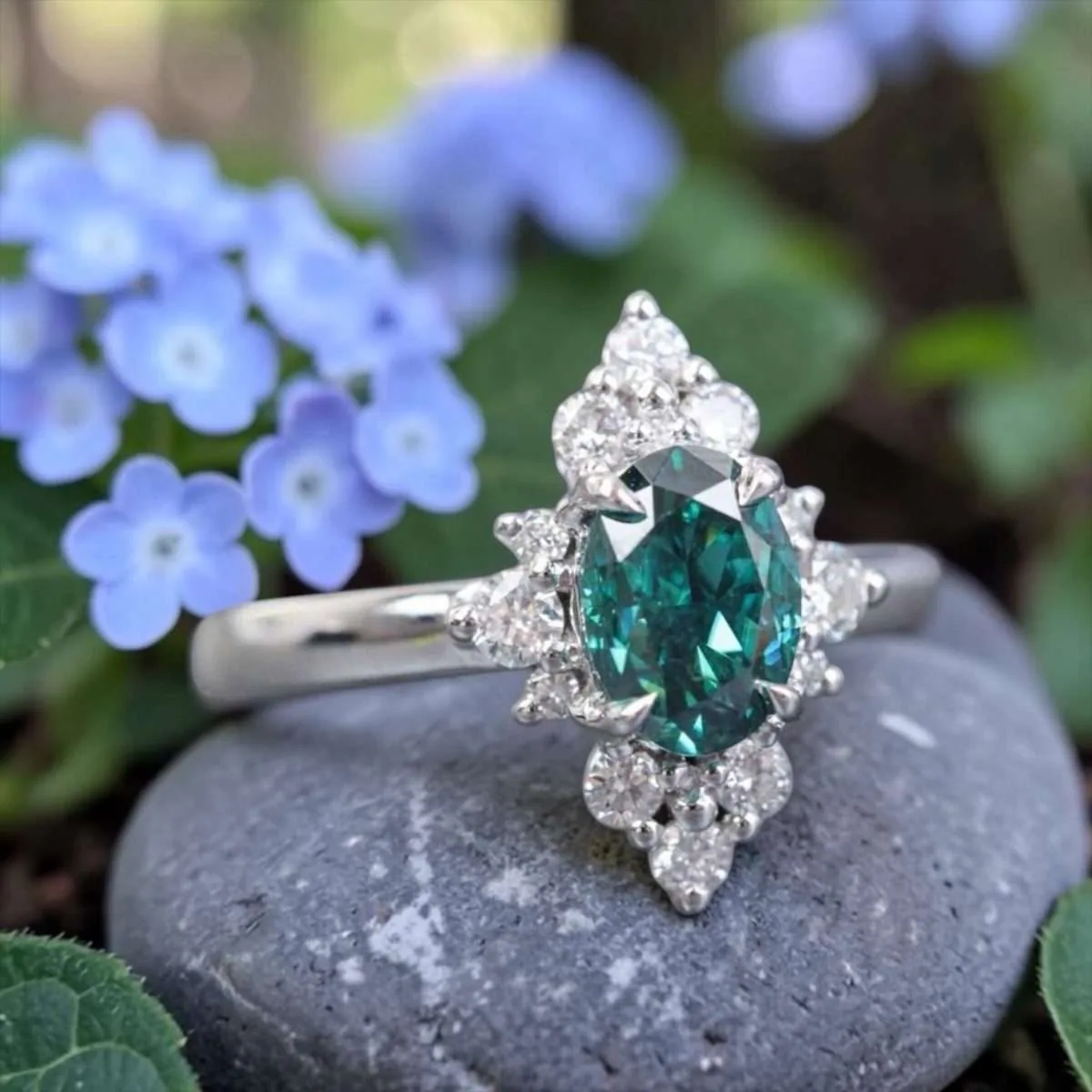
The designs and their memorial elements
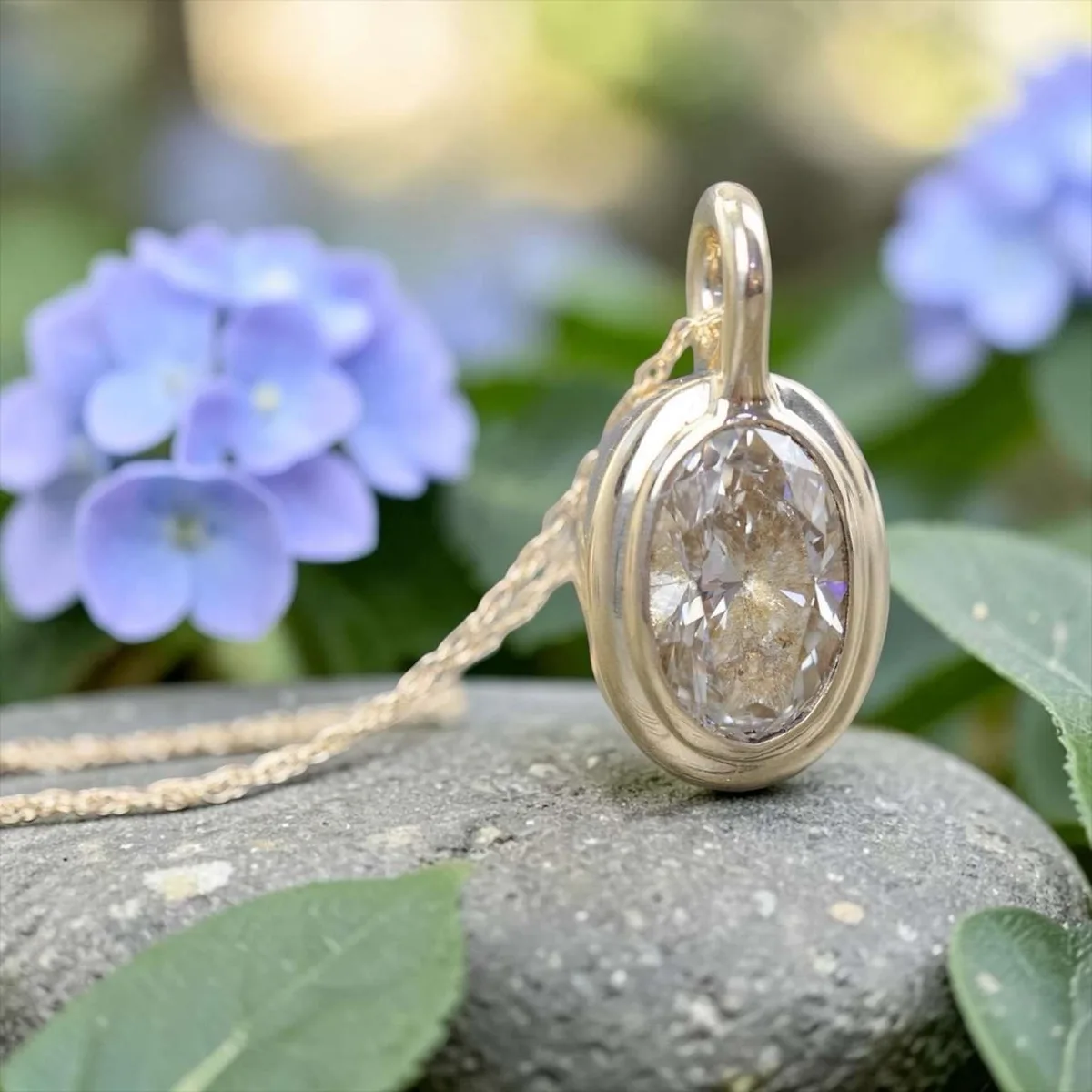
The Genesis designs make a good example of how much character can live in a familiar form. A cushion or oval silhouette changes the line of a pendant before any material or stone choice is made. On the current product pages, the visual center can be a laboratory-grown diamond selected for the design, while the memorial element belongs to a separate part of the piece. That plain distinction matters: these are diamond-set memorial pieces, not diamonds made from ashes. It lets the customer appreciate both parts of the work for what they are.
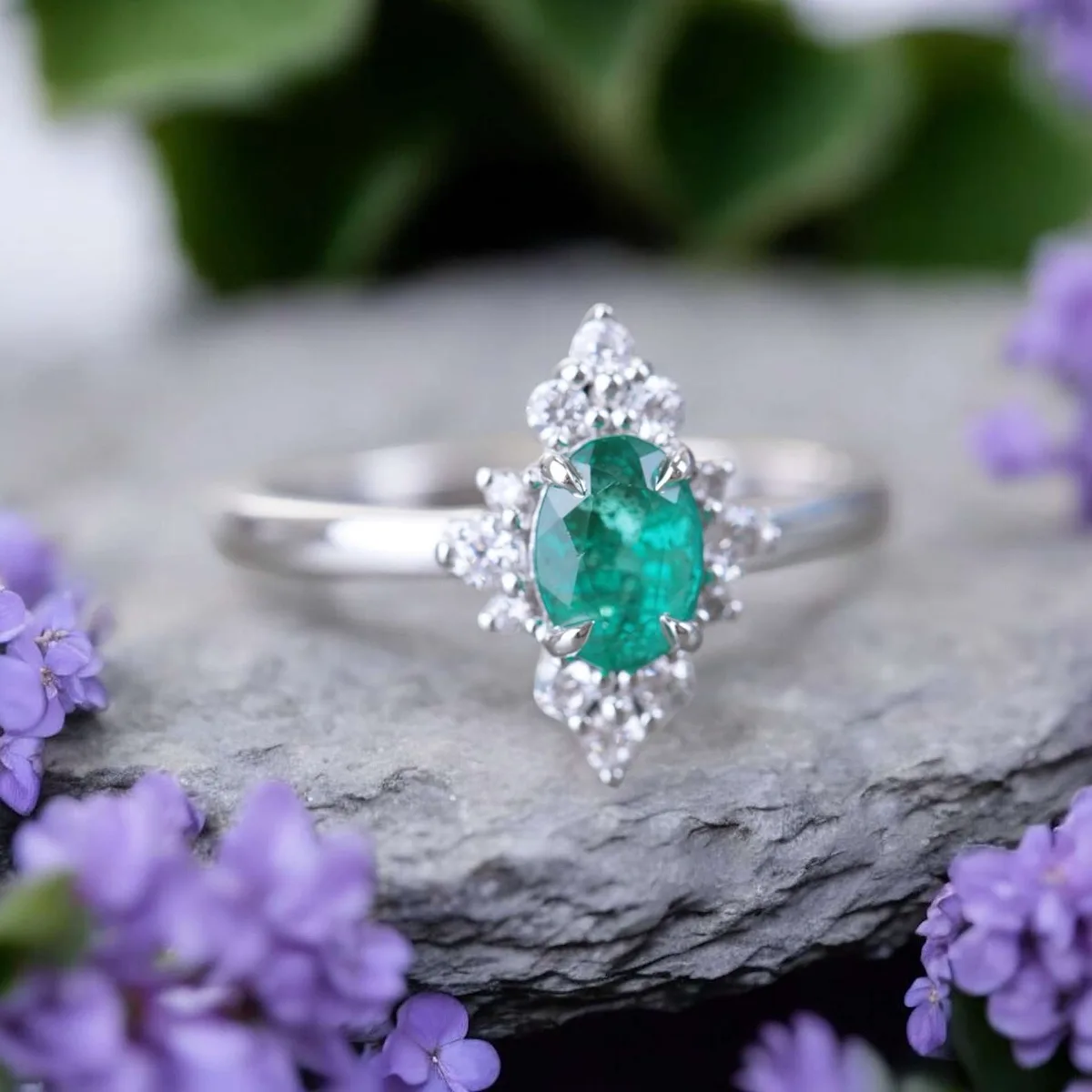
Polaris approaches the same idea as a ring. The image has a different kind of presence: it is seen in motion, held in the hand, and worn with other jewelry. Its listed options show how a center diamond, side stones, metal, and memorial component can contribute to one composition without becoming interchangeable details. The photographs in this story are Sugarberry product photographs used with owner authorization; they are a record of the designs, not a substitute for the selected configuration on a current product page.
Why the diamond search became IZIOS
IZIOS grew out of the practical side of this work. Jeffrey Jones built an internal diamond search after finding that spreadsheet-style information did not serve a customer conversation very well. A person choosing a diamond for a meaningful piece does not begin with database columns. They may begin with a shape, a feeling about color, a budget, or the question of how a stone will look in a setting. The search was a way to bring real diamond information into that conversation more naturally. It later became IZIOS, a public marketplace for laboratory-grown diamonds.
Sugarberry Memorials and IZIOS are related businesses. Sugarberry makes memorial jewelry; IZIOS helps people explore laboratory-grown diamonds. Consider someone deciding between an oval and a cushion for a pendant. Seeing their dimensions and outlines side by side makes the choice more concrete than comparing two shape names. The diamond search supplies that detail, while the maker’s design determines how the chosen stone and memorial element come together in the finished piece.
Craft and clarity
The most lasting part of the story is the connection between craft and clarity. A memorial design carries its own meaning. A diamond brings its own visual qualities and documentation. Putting them together calls for attention to both. Sugarberry's designs give that combination a physical form, while the origin of IZIOS explains why the family wanted a less opaque way to search for the diamond itself.