Archive: 2026 · Grading
Two GIA lab notes show why a diamond report has to match the stone
GIA examined a natural diamond carrying a copied report inscription and a pink lab-grown diamond shaped to look like natural rough. Each case called for a different kind of evidence.
- Report issue
- Fall 2026
- Source publication date
- IZIOS review
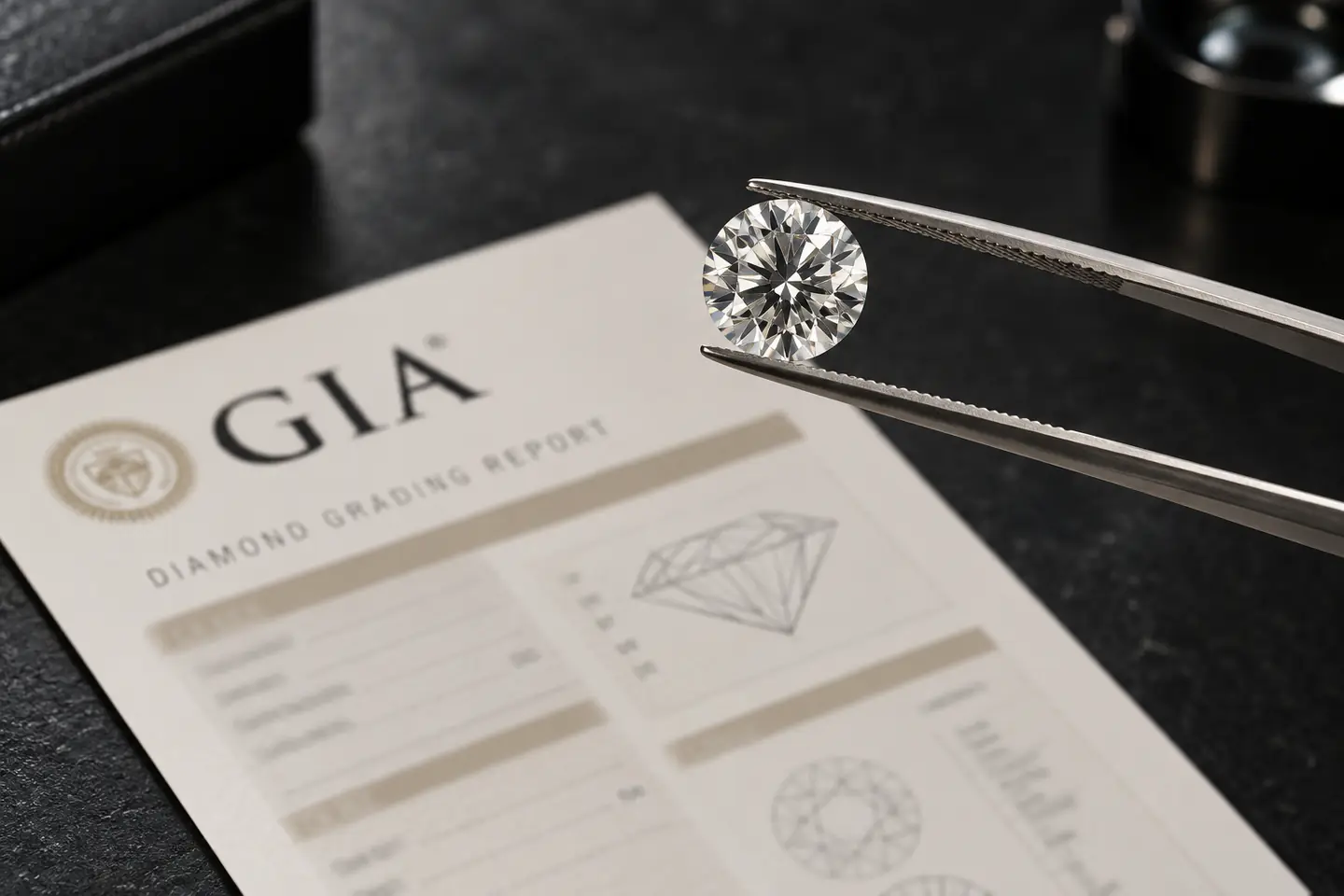
A report number connects a diamond to a laboratory record. The more difficult question is whether the stone in front of you is the one that record describes. Two case notes in the fall 2026 issue of Gems & Gemology put that question into focus. One involved a polished natural diamond with a copied GIA inscription. The other started with a rough pink crystal that looked natural but had been grown in a lab.
A real report number on a different diamond
At its Mumbai laboratory, GIA examined a natural diamond whose inscription matched the number of an existing report. The two diamonds were close in weight and grading characteristics. A simple search for the number could therefore bring up a real document while leaving the identity of the submitted diamond unresolved.
The lab compared the inscription and its position on the girdle with the stored image of the original stone. The details did not match. Both diamonds in that case were natural, and GIA did not establish why the second stone carried the copied inscription. The case concerns the identity of a specific diamond, even when the origin category on the paperwork is correct.
A pink rough crystal with a lab-grown origin
The New York laboratory faced a different question. A 6.06-carat pink rough crystal had several surface features associated with natural rough. The researchers used spectroscopy and fluorescence imaging to determine that it was a chemical vapor deposition (CVD) diamond whose color had been treated. GIA reported that the sample had also been shaped to resemble natural rough.
The two cases illustrate the difference between a diamond’s origin and its appearance. A rough crystal can look convincing and still need laboratory testing. A polished stone can have a genuine-looking inscription while the identity of that particular stone remains uncertain. These are individual case reports and do not measure how often either problem occurs.
What a buyer can check
Start with the issuing laboratory’s report lookup. Compare the report and listing for the number, lab-grown or natural identification, carat weight, shape and millimeter measurements. Ask for a clear answer if a field differs or the report belongs to another listing. When the physical match matters, a qualified independent gemologist can inspect the stone and advise whether it should go back to the lab.