Historical reference · Jewelry history
A love note spelled in gemstones: reading acrostic jewelry
Ruby, emerald, garnet, amethyst, ruby, diamond: the initials spell REGARD. A small piece of jewelry can hold a message that only its wearer knows how to read.
- Source context
- Historical feature reviewed November 1, 2026, using museum and gemological references
- IZIOS review
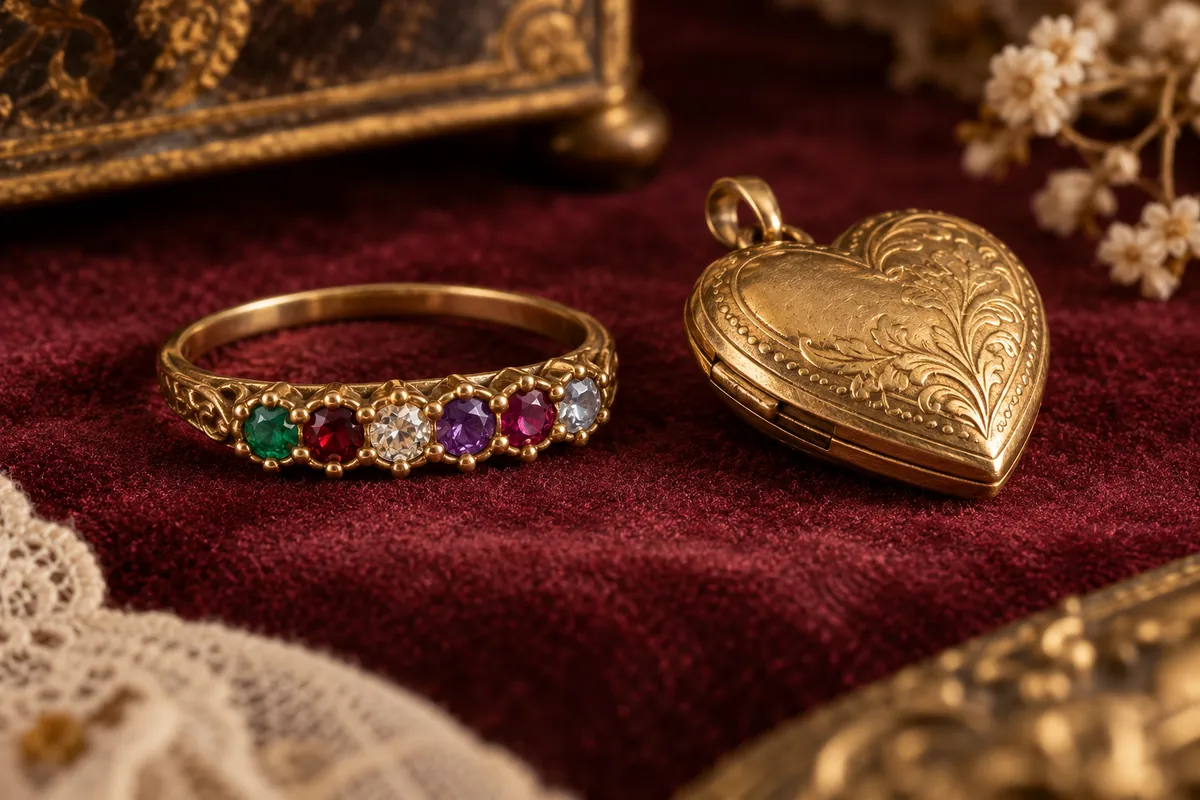
A ring set with a row of different-colored stones can be read twice. First comes the color: red beside green, perhaps a purple stone farther along. Then comes the hidden arrangement. If the first letters of the gemstones form a word, the jewel is an acrostic. What looked like a decorative sequence becomes a message.
How to read REGARD
One well-known example is REGARD, spelled with ruby, emerald, garnet, amethyst, ruby and diamond. GIA’s account of Victorian engagement-ring styles places these gemstone messages alongside flowers and hearts in the period’s romantic jewelry. The sequence makes the idea easy to understand. Two red stones may appear close in color, yet their different names do different work in the word.
That double reading is the charm. The piece does not have to announce its meaning to everyone who sees it. Someone unfamiliar with the convention can enjoy the arrangement; the recipient can know why each stone is there. The message is built into the materials rather than written openly across the surface, although an inscription could accompany it.
The V&A’s history of jewelry describes nineteenth-century interest in earlier styles and in forms drawn from nature. Acrostics belong comfortably within a world in which a jewel could carry associations beyond its materials. A flower, a heart or a gemstone sequence invited the wearer to read something into the design. The meaning came from a shared convention or a private understanding, not simply from the value of the stones.
Composing a message
Spelling a message also creates a design problem. The letters determine a sequence of stone names, but the eye sees colors, proportions and spacing. A designer must bring those two arrangements together. If every stone is given equal visual weight, the result may read as a row; a different setting can emphasize one part of the word. The concept is simple, while its expression can vary considerably.
Imagine planning a contemporary version of REGARD. Before thinking about the ring’s width or metal, write the six stone names in order. Then consider how their colors sit together. The second ruby is required by the word, but it also creates a visual repetition. The diamond at the end has another appearance again. The lettering supplies a starting structure; the designer still has a piece of jewelry to compose.
A private message offers more freedom and more decisions. A name, an initial or a short word might matter more than reproducing a familiar historical sequence. Some letters may suggest several possible stones, while others make the design less straightforward. It is worth deciding whether the word, the color arrangement or a particular gemstone matters most. Otherwise the attempt to satisfy every preference can obscure the original idea.
Keeping the message readable
The stone names should be recorded with the finished piece. A photograph can preserve the arrangement, but color alone may not reveal which gemstone was intended to supply each letter. A small card stating the sequence and the occasion makes the message available to its next owner. Without that explanation, a very personal design can gradually become an attractive but unreadable row of stones.
This is also where material descriptions and personal meaning can coexist comfortably. A contemporary maker should identify the stones used, including laboratory-grown material or treatments where relevant. That information does not diminish the message. It tells the future wearer what the object is made from, while the accompanying note tells them why it was made.
An inherited acrostic jewel raises a different kind of question: what can actually be read from it? A proposed word should fit the stone identifications and their order. If the family’s interpretation is uncertain, it is better to preserve it as a family account than turn it into a firm historical attribution. The uncertainty can remain part of the object’s story without making the object any less worth keeping.
The idea translates easily beyond an exact antique reproduction. A modern ring, a bracelet or another small arrangement can use gemstones to carry a message suited to its recipient. What makes it personal is the choice and the explanation. The person opening the box might first see the colors, then learn the word—and from that moment see the same stones differently.